
Software Development in 2026: What Small Businesses Actually Need to Know
Custom software used to be something only large companies could justify. That's changed. In 2026, the tools, cloud infrastructure, and AI-assisted development practices that used to require an enterprise-sized team are now accessible to small and mid-size businesses — and the businesses using them well are pulling ahead fast. Here's what's actually shifted, and what it means if you're planning a new build or thinking about updating what you already have.
AI has become part of how software gets built, not just what it powers
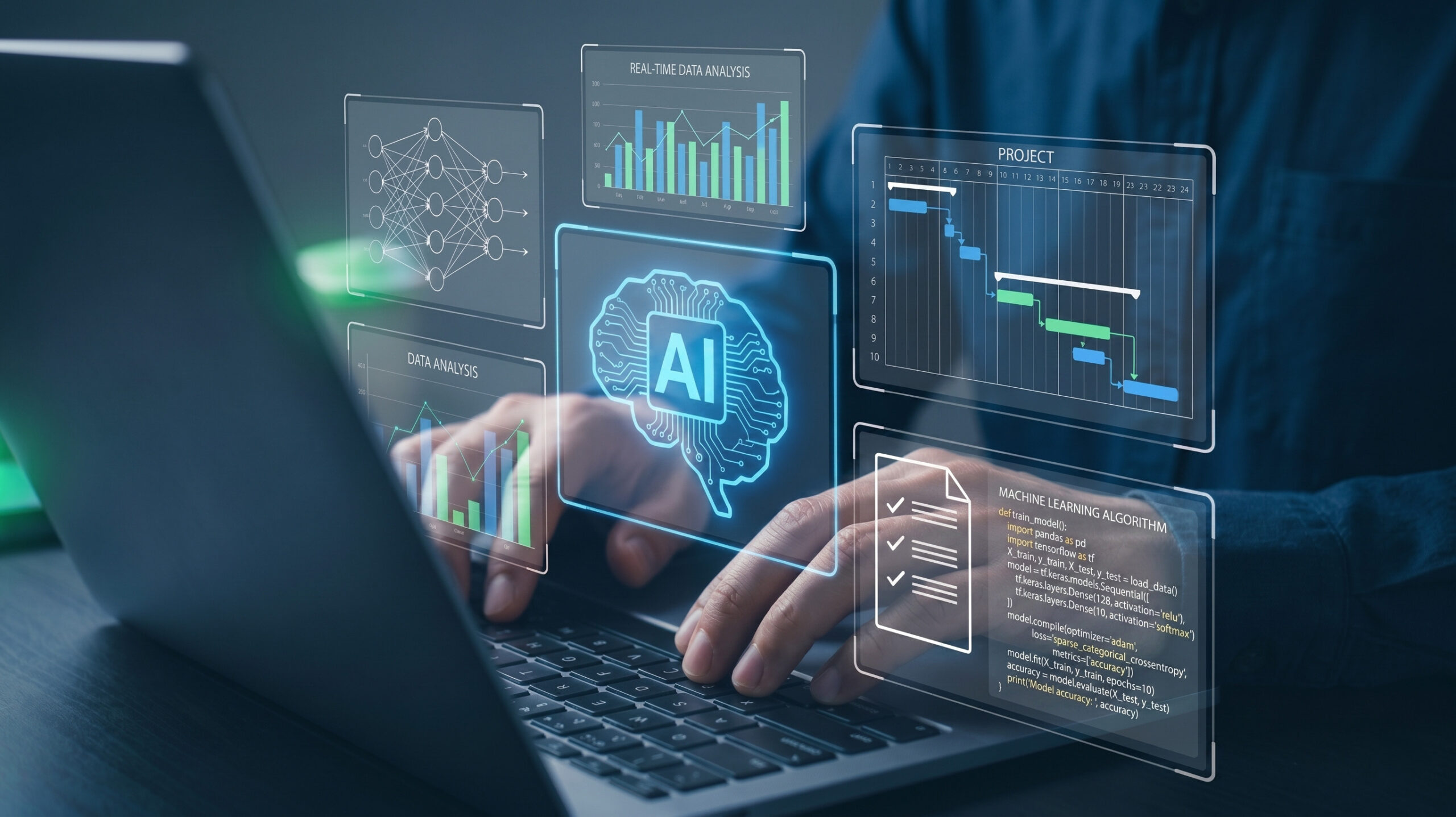
A few years ago, "AI in software development" mostly meant the app itself had a chatbot or a recommendation feature. That's no longer the main story. Today, AI is embedded in the development process itself — writing boilerplate code, generating tests, drafting documentation, and speeding up routine tasks that used to eat weeks of a developer's time. Recent industry surveys show the large majority of professional developers are now using AI tools as part of their regular workflow.
The practical upside for you as a business owner: development timelines are compressing. Projects that once took months can realistically move in weeks. The catch — and it's an important one — is that AI-generated code still needs experienced human review. Teams that skip that step end up spending extra time debugging issues that a more careful process would have caught. This is exactly why "AI-assisted" beats "AI-only" — speed without oversight just moves the cost from build time to fix time.
Cloud-native is no longer a "nice to have"
Hosting software on your own servers, or building it in a way that's tightly locked to one environment, is quickly becoming the exception rather than the norm. Cloud-native development — building software designed from day one to run on flexible, scalable cloud infrastructure — is now considered the baseline expectation, not a modern upgrade.
For a small business, the real-world benefit isn't abstract: it means your software can handle a traffic spike, a busy season, or sudden growth without crashing or requiring a costly rebuild. It also tends to lower long-term infrastructure costs compared to traditional hosting, since you're only paying for the capacity you actually use.
Security has moved earlier in the process
Security used to be something bolted onto software near the end of a project. That approach is increasingly seen as a liability rather than a shortcut. Small businesses in particular are frequently cited as attractive targets for data breaches, largely because security hasn't historically been built into how they operate. The shift now is toward designing security into a system from the start — access controls, data handling, and testing considered at every stage of the build, not just before launch.
If you're planning a new software project, this is worth asking about directly: is security something your developer is planning for from day one, or something they're planning to "add later."
Software is increasingly about connecting systems, not building from scratch
Fewer businesses are building every piece of software from the ground up. Instead, the trend is toward connecting the tools you already use — your CRM, your accounting software, your booking system, your marketing platform — so they work together instead of operating as disconnected silos. Disconnected systems, sometimes called data silos, are a common and costly problem: information gets duplicated, tasks get repeated manually, and nothing talks to anything else.
This is also where custom software development and AI automation increasingly overlap — a lot of what businesses now call "custom software" is really about integration: making existing systems smarter and better connected, not necessarily building something brand new from zero.
What this means practically
If you're a business owner evaluating a new software project or an update to something you already have:
- Ask how AI fits into the development process itself — not just the final product, but whether it's being used responsibly to speed up the build without cutting corners on review.
- Build for the cloud from the start, even if you're small today. Retrofitting cloud infrastructure later is more expensive than building for it up front.
- Bring up security early, not as an afterthought — ask your developer directly how it's handled during the build, not just at launch.
- Consider whether you need something new at all, or whether better integration between your existing tools would solve the problem faster and cheaper.
Where we come in
This is the kind of work we focus on — whether that's building custom software the right way from the ground up, or connecting the systems you already have so they actually work together. We start by understanding what you're trying to solve, not by pushing a specific technology, so the solution actually fits your business instead of the other way around.